Готовая презентация · 6 слайдов
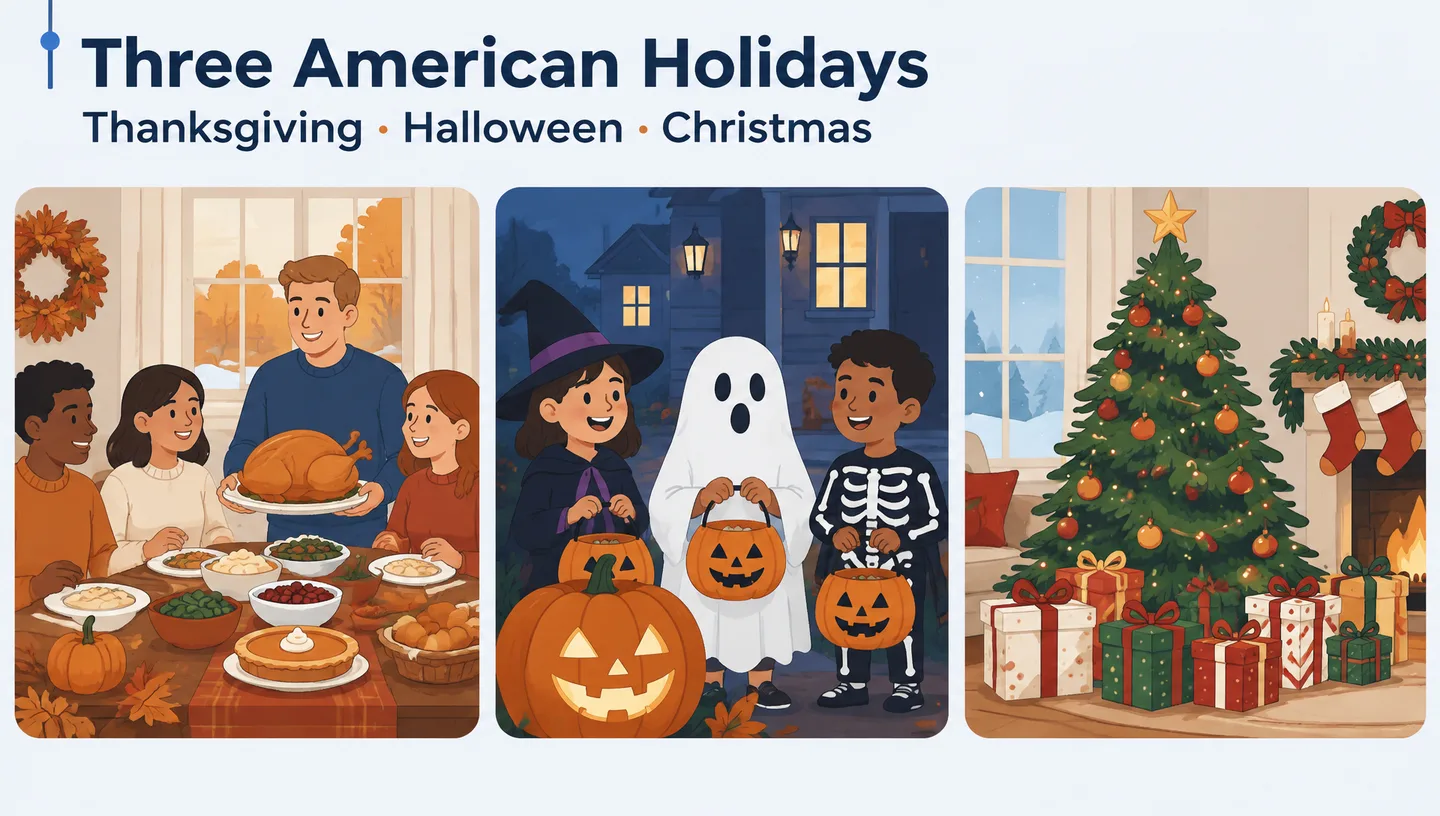
Three American Holidays
Слайды и пояснения открыты без входа. Для скачивания PDF или PowerPoint понадобится войти.
 Смотреть слайды
План презентации
2. How to read a holiday
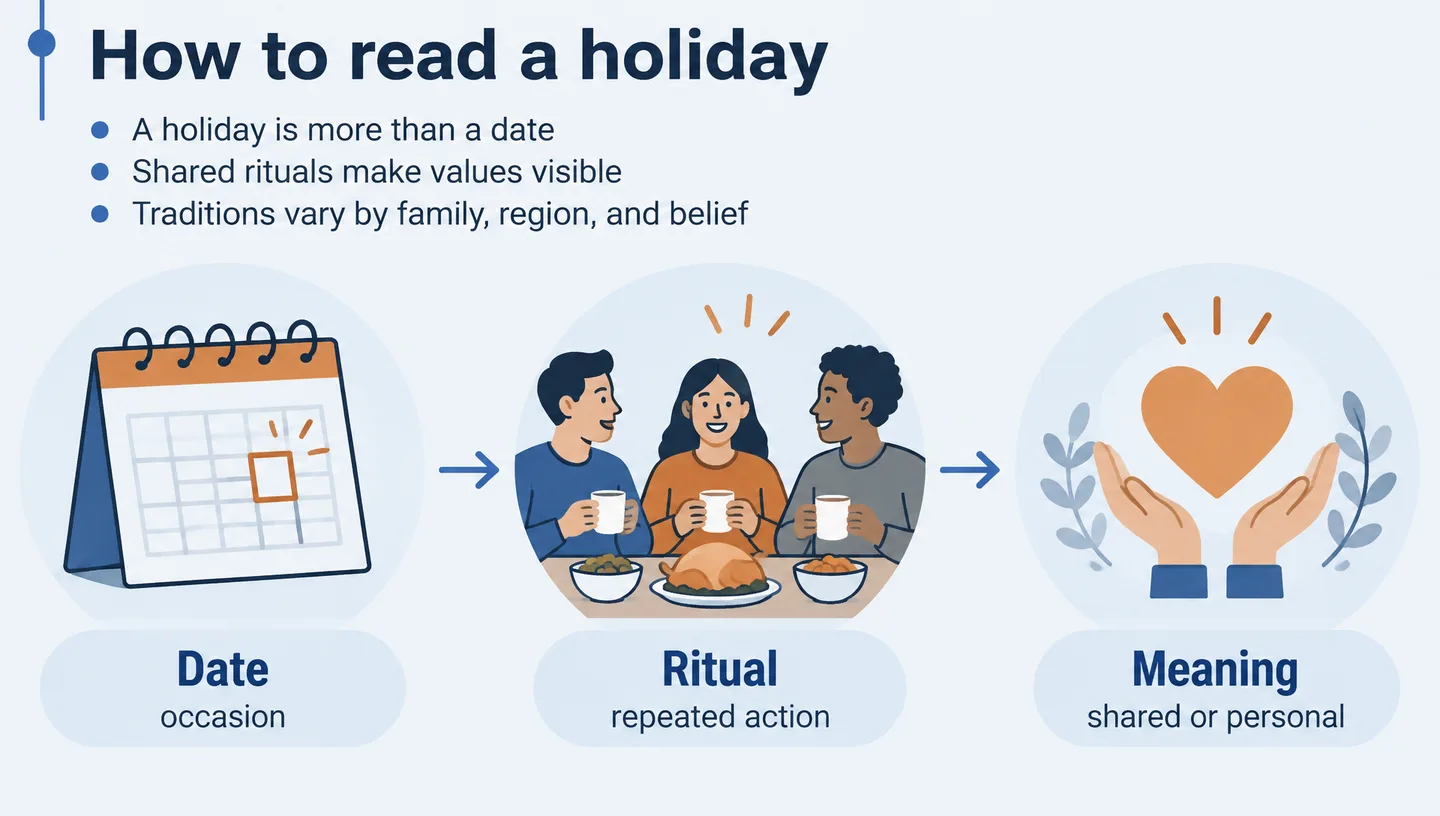
A holiday is more than a date Shared rituals make values visible Traditions vary by family, region, and belief Date — occasion Ritual — repeated action Meaning — shared or personal
Explain that rituals are repeated actions that make a holiday recognizable. A tradition may be common without being universal; families and communities adapt or skip traditions.
3. Thanksgiving: gathering
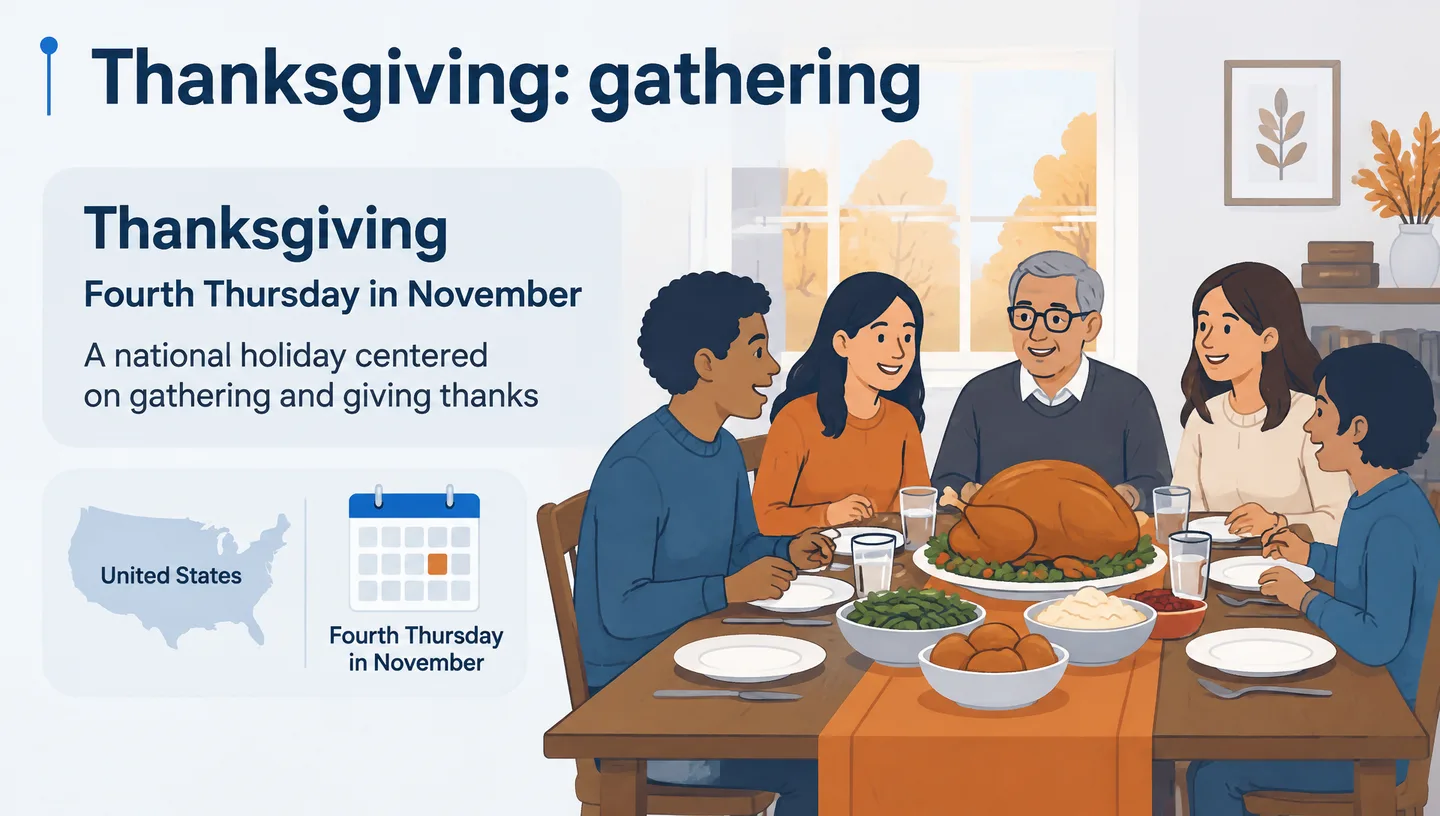
Thanksgiving Fourth Thursday in November A national holiday centered on gathering and giving thanks United States — Fourth Thursday in November
Thanksgiving is observed on the fourth Thursday in November in the United States. Many people use the day to gather and express gratitude. Avoid presenting one origin story as the complete account of the holiday.
4. A table and a moment of thanks
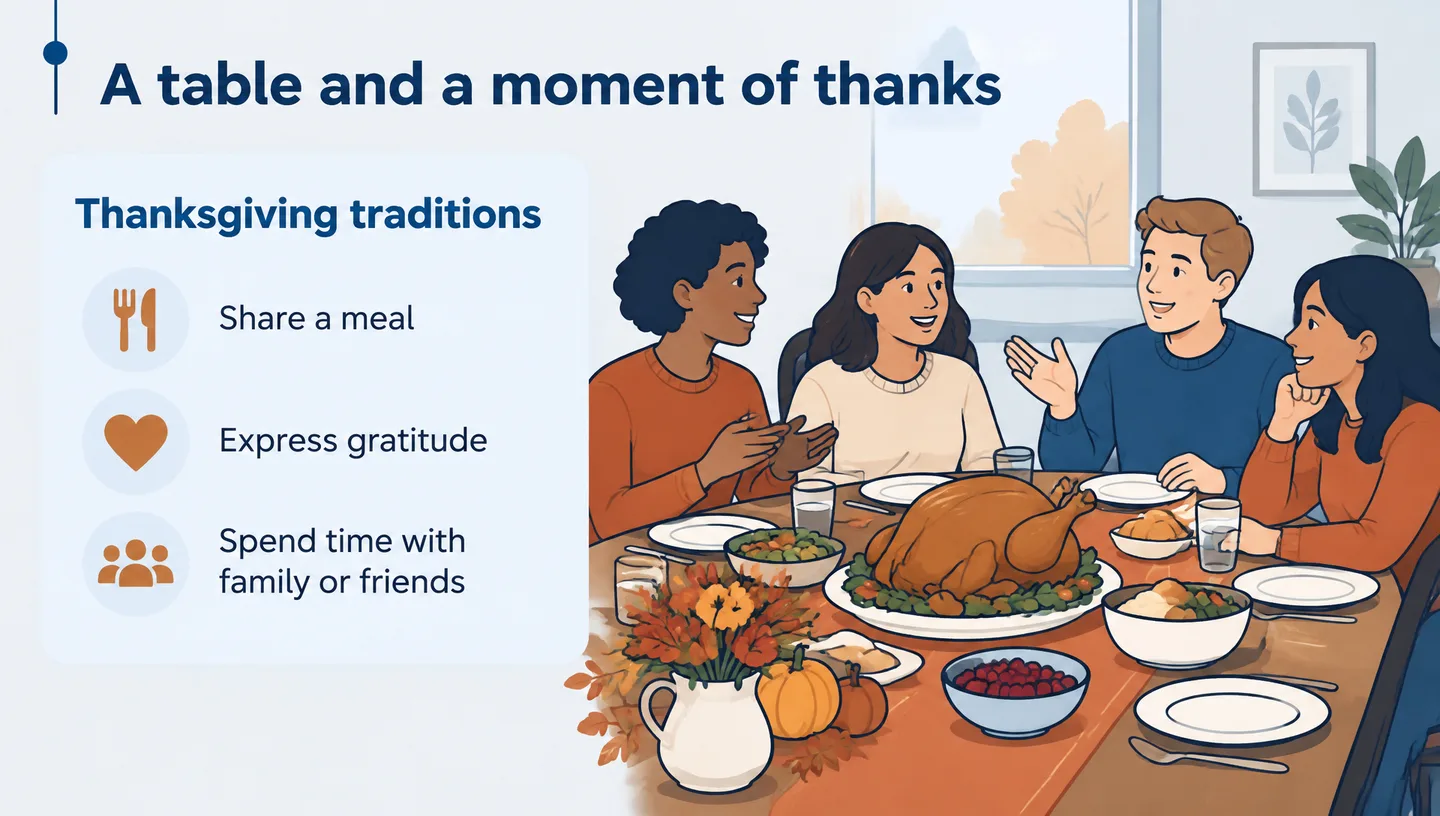
Thanksgiving traditions Share a meal Express gratitude Spend time with family or friends
Describe these as familiar customs, not requirements. Some people celebrate with friends, community events, or a quiet day; others do not observe the holiday. Acknowledge that Thanksgiving’s history is understood differently, including by Indigenous communities.
5. Halloween: playful transformation
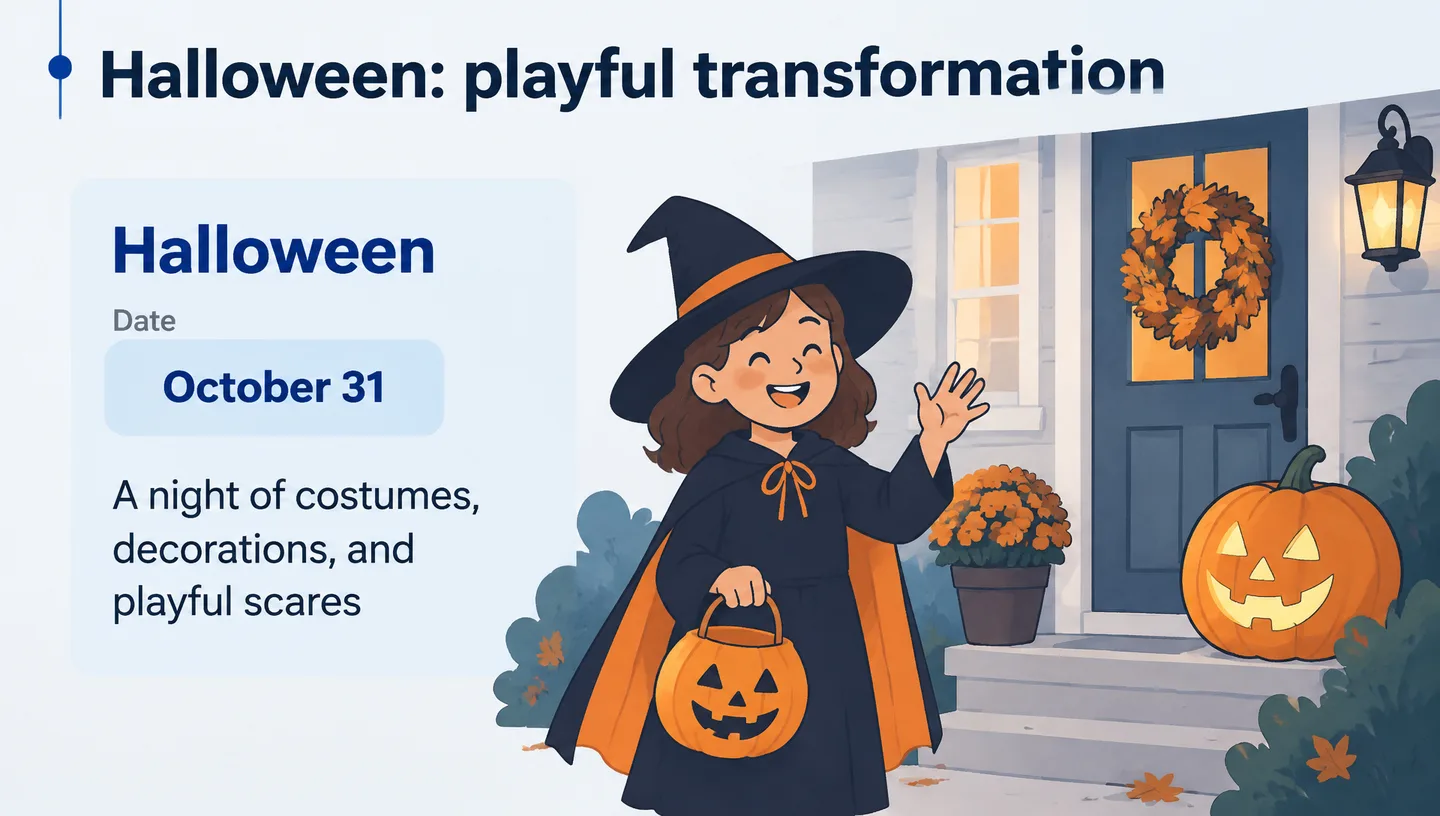
Halloween October 31 A night of costumes, decorations, and playful scares Date — October 31
Halloween takes place on October 31. Costumes and decorations make ordinary spaces feel playful or eerie; celebrations can be for children and adults alike.
6. Costumes, candy, and pumpkins
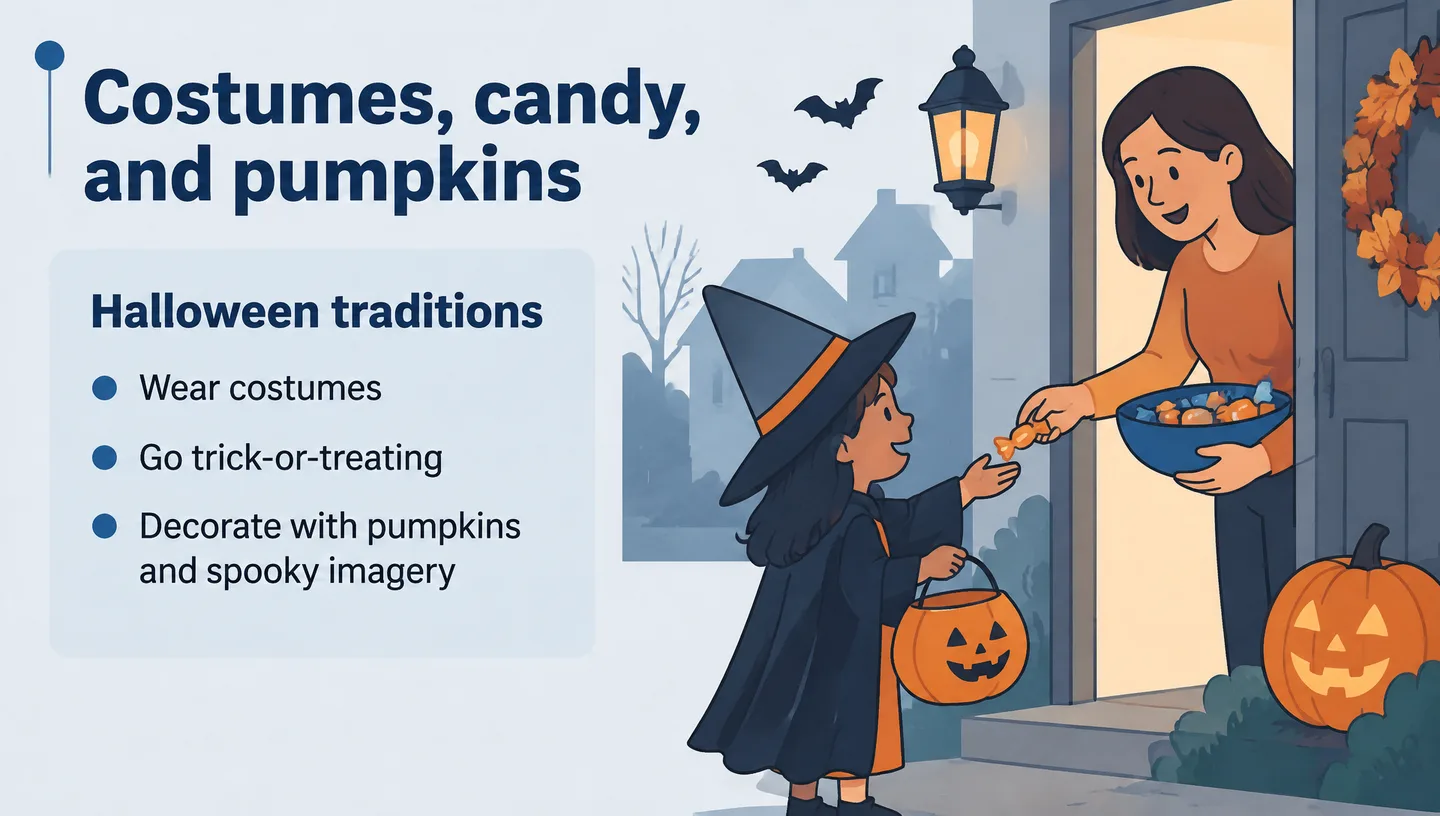
Halloween traditions Wear costumes Go trick-or-treating Decorate with pumpkins and spooky imagery
Explain trick-or-treating as children visiting homes or organized events to receive candy, where this custom is practiced. Pumpkin carving and decorations are also common, but customs vary by household and community.