Готовая презентация · 6 слайдов

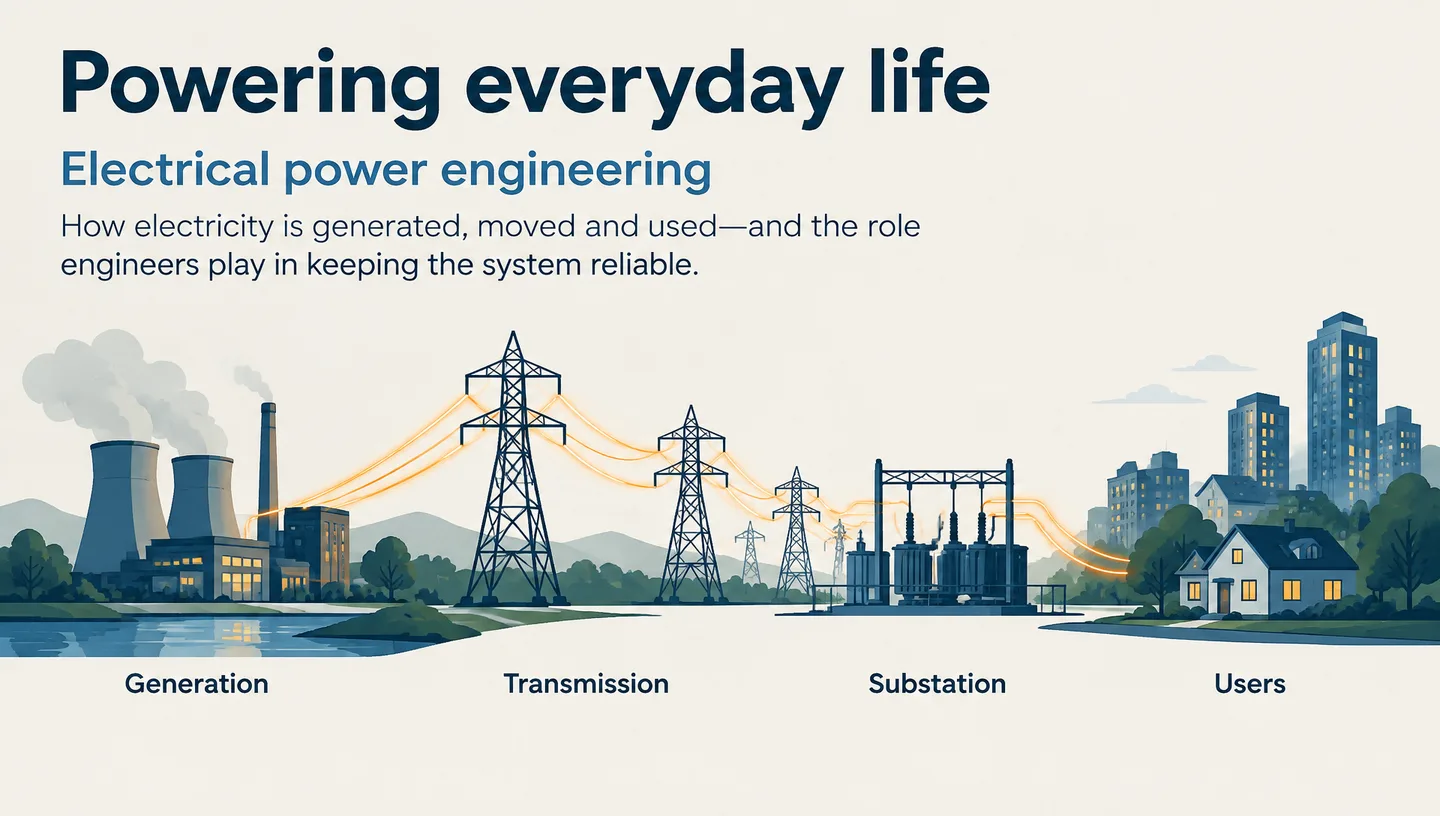
Powering everyday life

Electrical power engineering How electricity is generated, moved and used—and the role engineers play in keeping the system reliable. Generation Transmission Substation Users
Готовая презентация

6 слайдов · PDF и PowerPoint

Бесплатно после входа.

Собрать свою презентацию по этой теме →

В этой презентации

Слайды и пояснения

Показать план

План презентации

  1. Powering everyday life
  2. What is power engineering?
  3. From energy source to electricity
  4. How the grid delivers power
  5. The engineer’s work
  6. A changing energy system
1. Powering everyday life

Electrical power engineering How electricity is generated, moved and used—and the role engineers play in keeping the system reliable. Generation Transmission Substation Users

Подсказка для выступления

Introduce the specialty as the engineering work behind the electricity people use every day. Preview the path from generation to the grid and the engineer’s responsibilities.

2. What is power engineering?

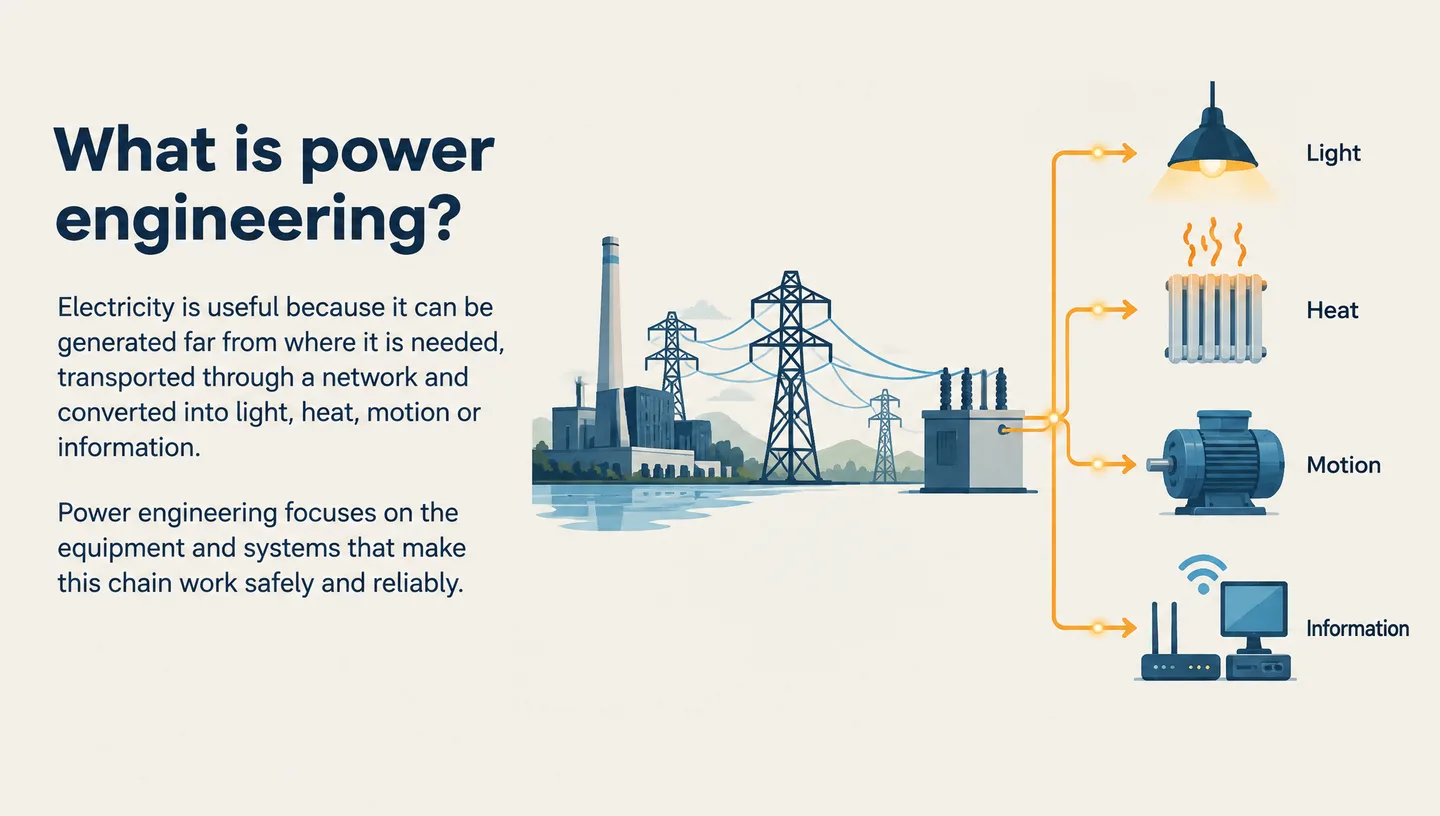
What is power engineering?

Electricity is useful because it can be generated far from where it is needed, transported through a network and converted into light, heat, motion or information. Power engineering focuses on the equipment and systems that make this chain work safely and reliably. Light Heat Motion Information

Подсказка для выступления

Clarify that electrical power engineering is one area of the broader electrical engineering field. Emphasize that its focus is the systems that generate, transmit, distribute and use electrical power.

3. From energy source to electricity

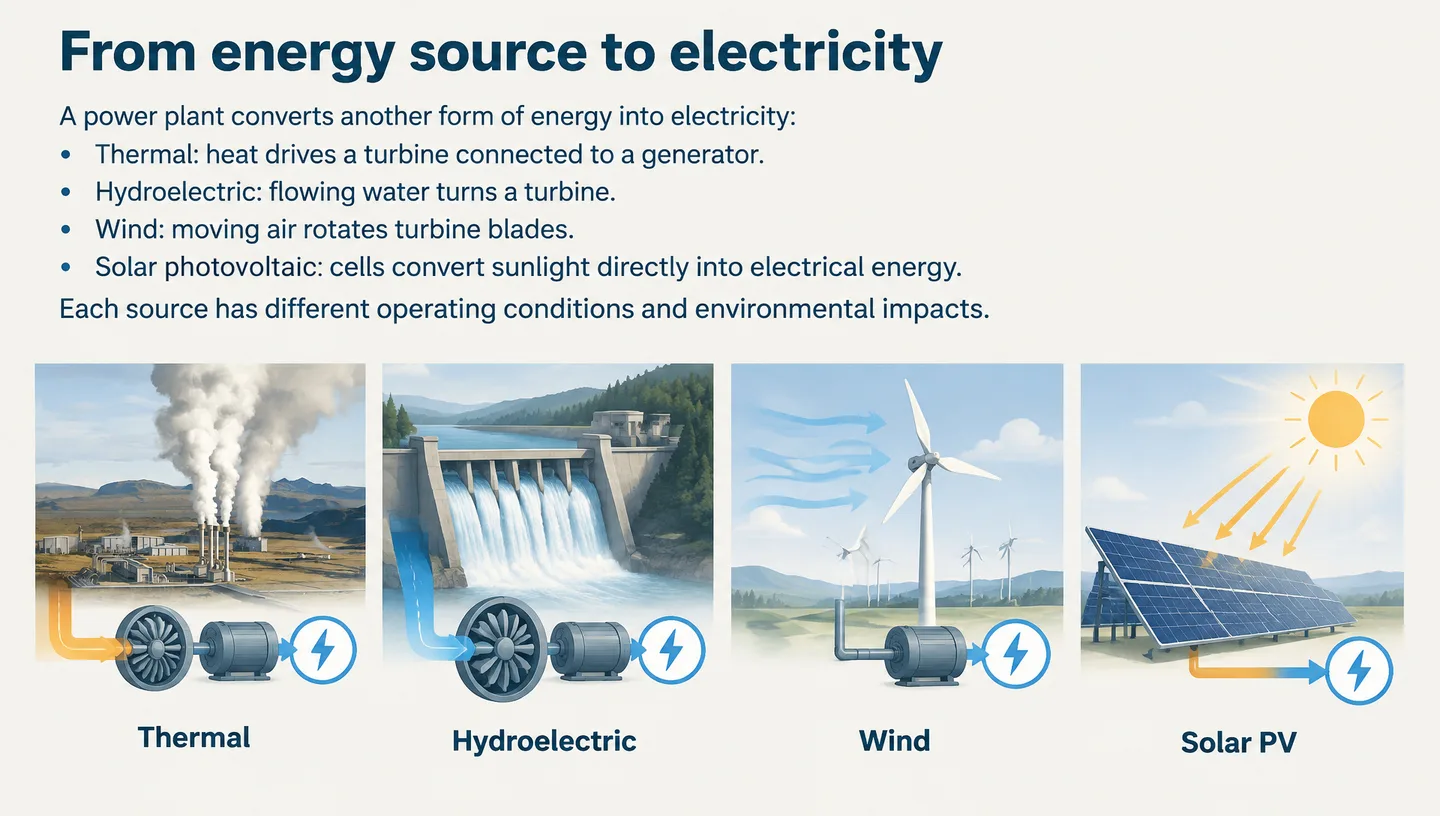
From energy source to electricity

A power plant converts another form of energy into electricity: • Thermal: heat drives a turbine connected to a generator. • Hydroelectric: flowing water turns a turbine. • Wind: moving air rotates turbine blades. • Solar photovoltaic: cells convert sunlight directly into electrical energy. Each source has different operating conditions and environmental impacts. Thermal Hydroelectric Wind Solar PV

Подсказка для выступления

Explain the different conversion pathways: turbines drive generators in thermal, hydro and wind plants, while photovoltaic cells generate electricity directly. Note that no source is impact-free; operating conditions and environmental effects differ.

4. How the grid delivers power

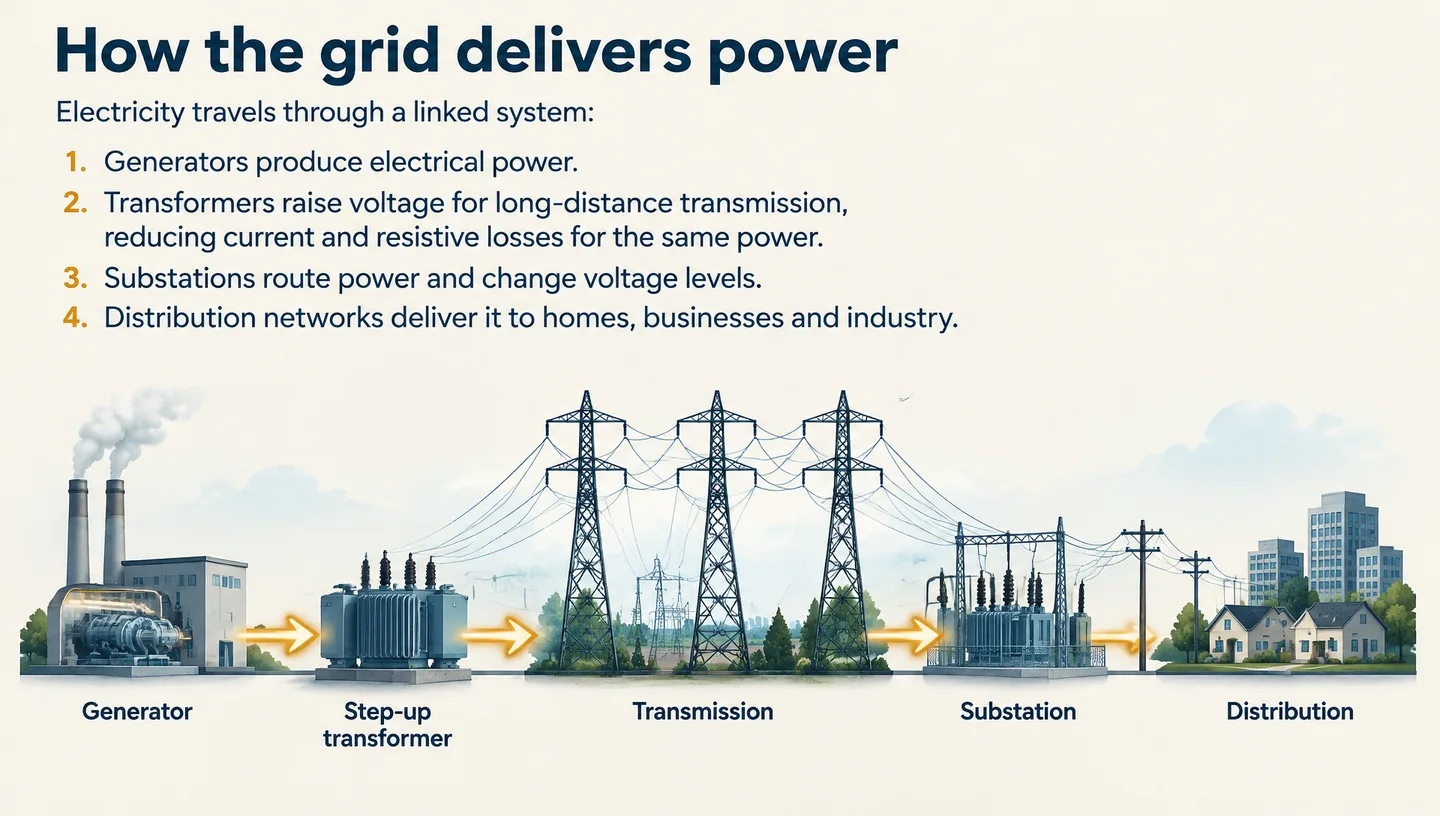
How the grid delivers power

Electricity travels through a linked system: 1. Generators produce electrical power. 2. Transformers raise voltage for long-distance transmission, reducing current and resistive losses for the same power. 3. Substations route power and change voltage levels. 4. Distribution networks deliver it to homes, businesses and industry. Generator Step-up transformer Transmission Substation Distribution

Подсказка для выступления

Walk through the sequence from generator to consumer. Explain that raising voltage for transmission allows lower current for the same power, which reduces resistive losses in the lines; substations then adjust voltage and route power for distribution.

5. The engineer’s work

The engineer’s work

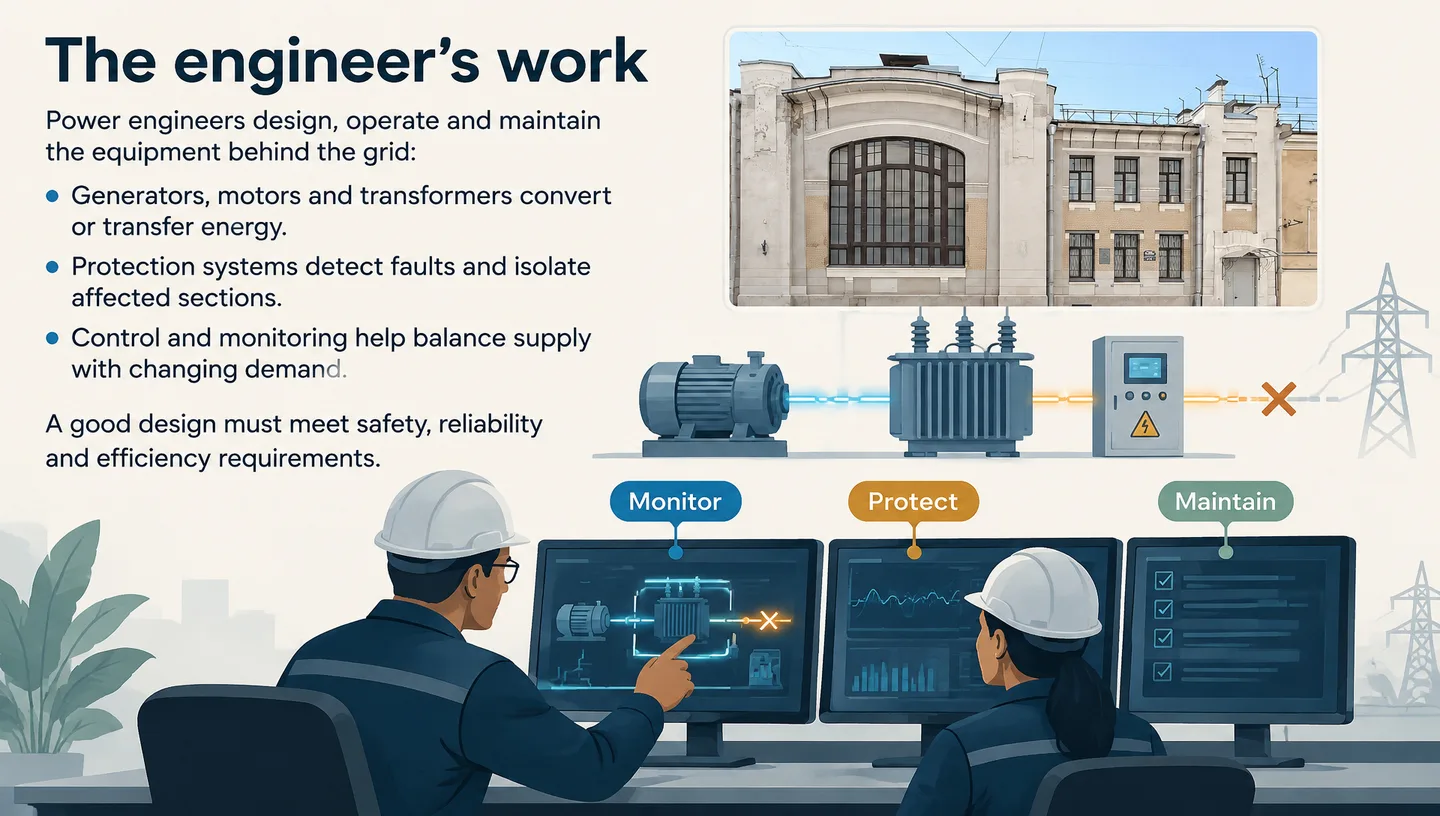
Power engineers design, operate and maintain the equipment behind the grid: • Generators, motors and transformers convert or transfer energy. • Protection systems detect faults and isolate affected sections. • Control and monitoring help balance supply with changing demand. A good design must meet safety, reliability and efficiency requirements. Monitor Protect Maintain

Подсказка для выступления

Describe the engineer’s work as a combination of design and operations. Give a simple protection example: when a fault occurs, protective equipment detects abnormal conditions and disconnects the affected section so the rest of the system can continue operating where possible.

6. A changing energy system

A changing energy system

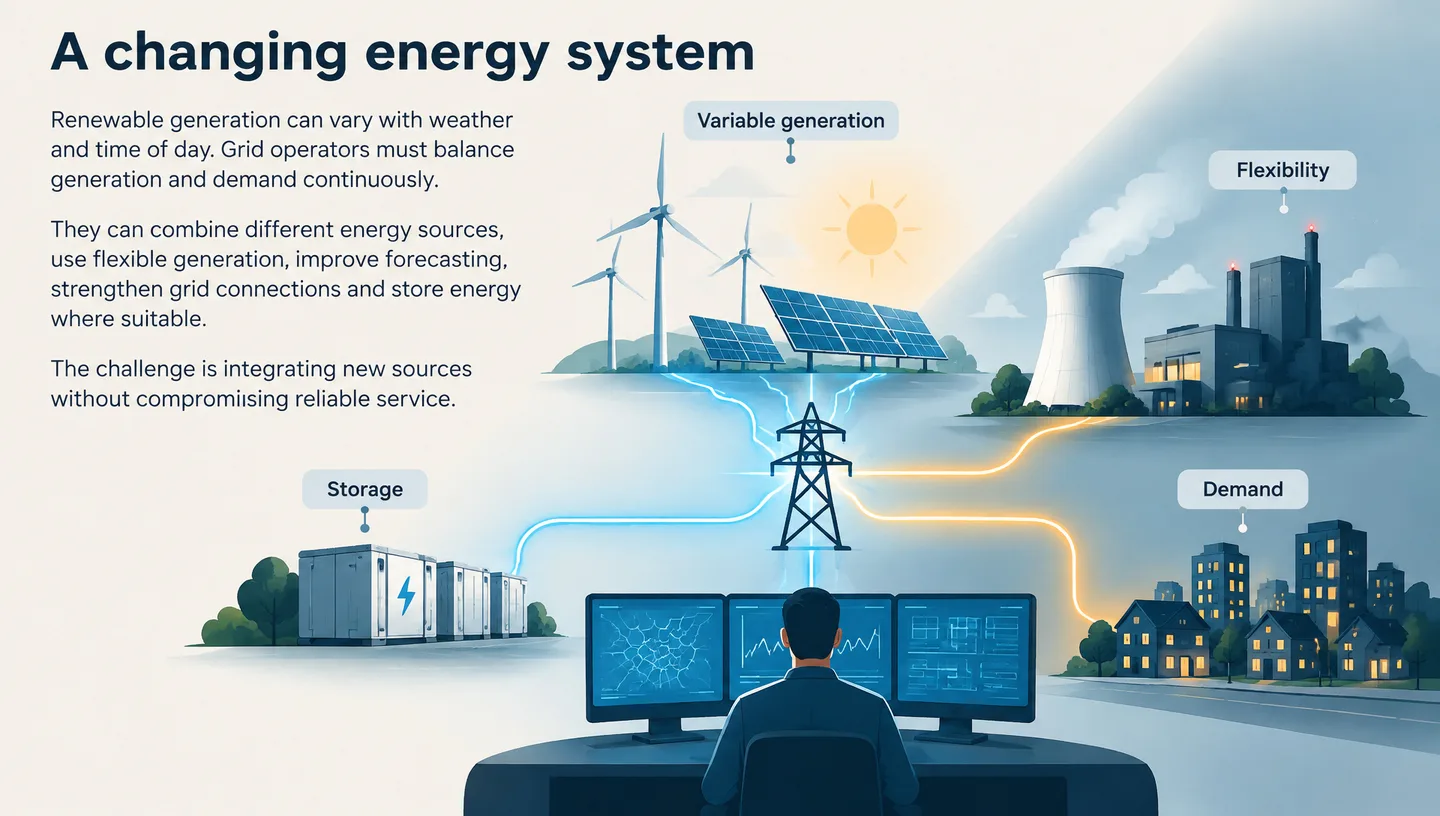
Renewable generation can vary with weather and time of day. Grid operators must balance generation and demand continuously. They can combine different energy sources, use flexible generation, improve forecasting, strengthen grid connections and store energy where suitable. The challenge is integrating new sources without compromising reliable service. Variable generation Flexibility Storage Demand

Подсказка для выступления

Explain that variable renewable output and changing demand create a balancing task. Describe the listed responses as complementary tools rather than a single solution; their suitability depends on the grid and operating conditions.

Источники