Готовая презентация · 6 слайдов

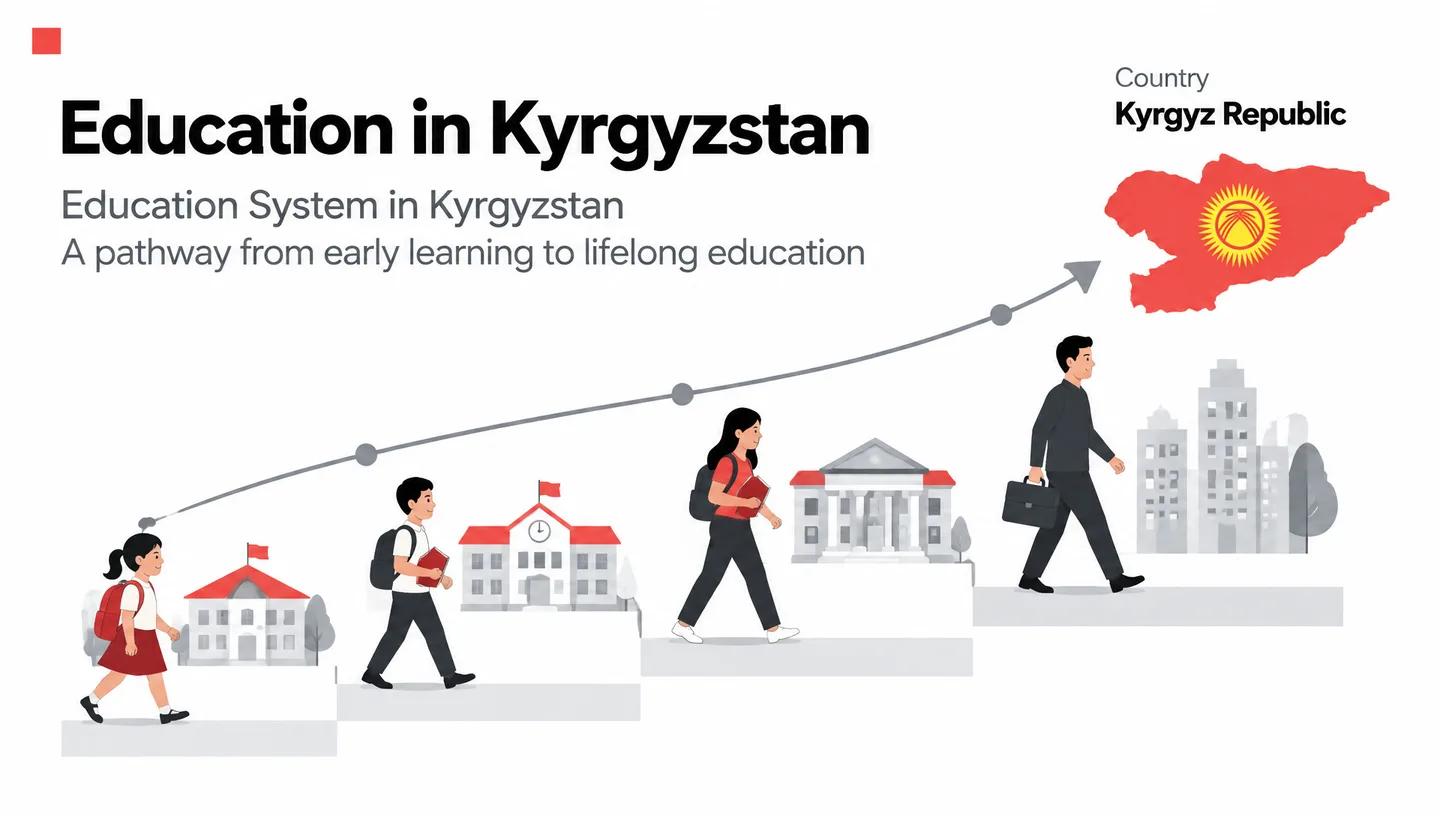
Education in Kyrgyzstan

Education System in Kyrgyzstan A pathway from early learning to lifelong education Country — Kyrgyz Republic
Готовая презентация

6 слайдов · PDF и PowerPoint

Бесплатно после входа.

Собрать свою презентацию по этой теме →

В этой презентации

Слайды и пояснения

Показать план

План презентации

  1. Education in Kyrgyzstan
  2. The Main Structure
  3. How School Is Organized
  4. Access and Equality
  5. Choosing a Further Path
  6. Why Quality Matters
1. Education in Kyrgyzstan

Education System in Kyrgyzstan A pathway from early learning to lifelong education Country — Kyrgyz Republic

Подсказка для выступления

Introduce the topic: education in Kyrgyzstan includes several stages, from preschool to postgraduate study. Explain that the presentation focuses on how the system is organized and how it is changing.

2. The Main Structure

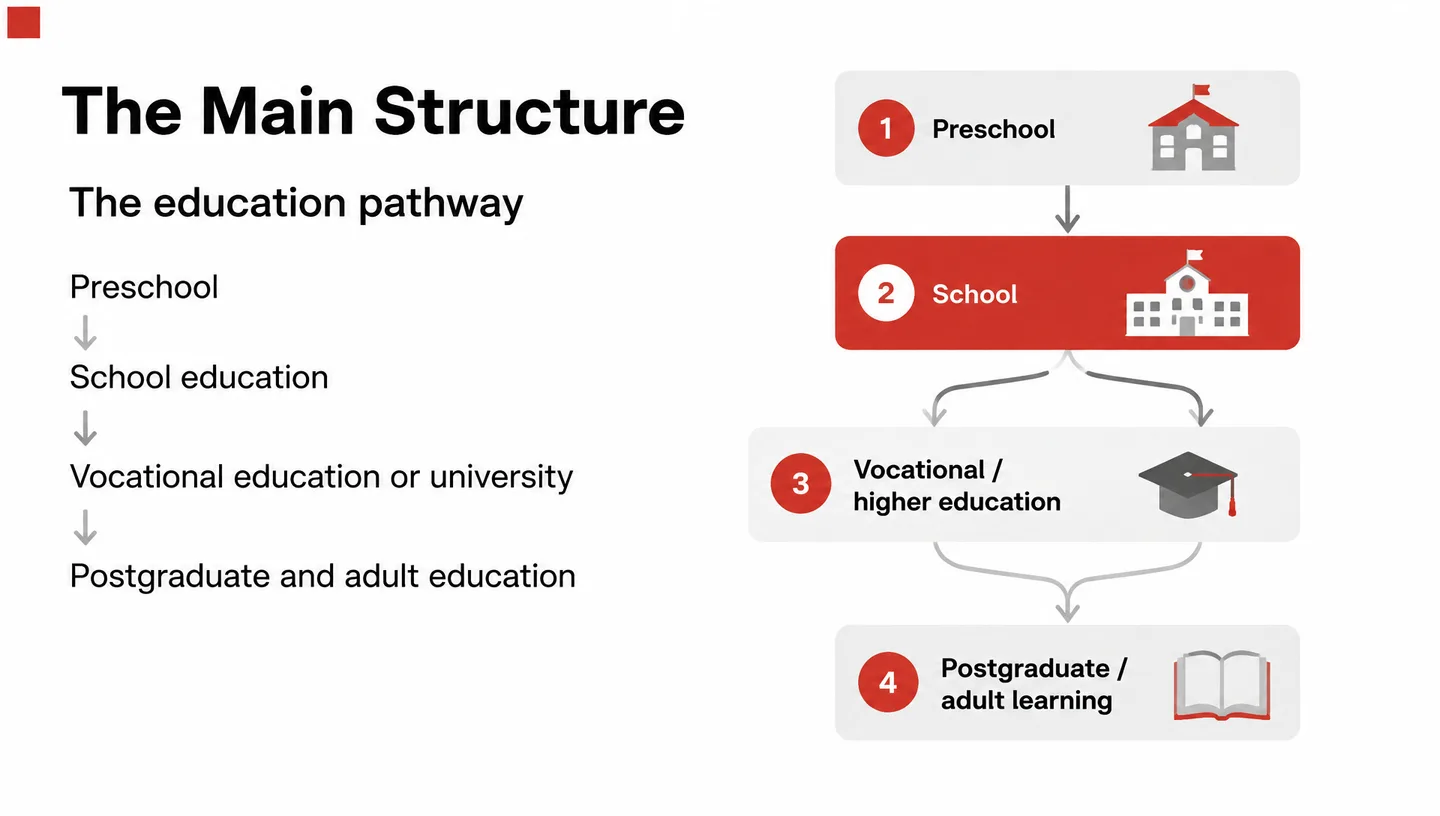
The Main Structure

The education pathway Preschool ↓ School education ↓ Vocational education or university ↓ Postgraduate and adult education 1 — Preschool 2 — School 3 — Vocational / higher education 4 — Postgraduate / adult learning

Подсказка для выступления

Explain that the system combines general education, vocational education, higher education, and continuing education. The exact organization has changed over time, so present this as a structural overview rather than a current statistical snapshot.

3. How School Is Organized

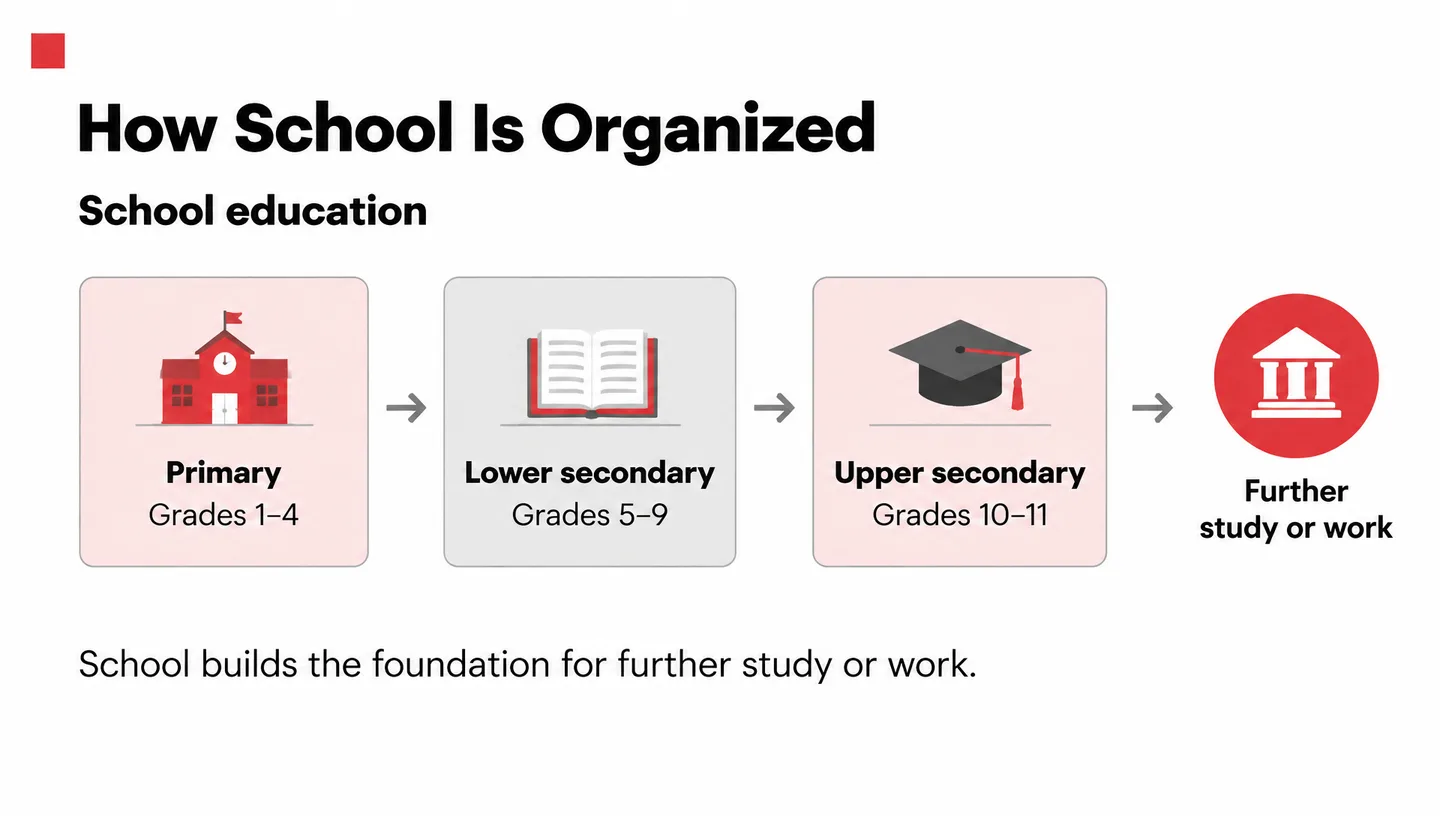
How School Is Organized

School education Primary school — grades 1–4 Lower secondary — grades 5–9 Upper secondary — grades 10–11 School builds the foundation for further study or work. Primary — Grades 1–4 Lower secondary — Grades 5–9 Upper secondary — Grades 10–11

Подсказка для выступления

Describe the school structure identified in the source: primary grades 1–4, lower secondary grades 5–9, and upper secondary grades 10–11. Mention that the source describes primary and lower secondary education as compulsory and free for children.

4. Access and Equality

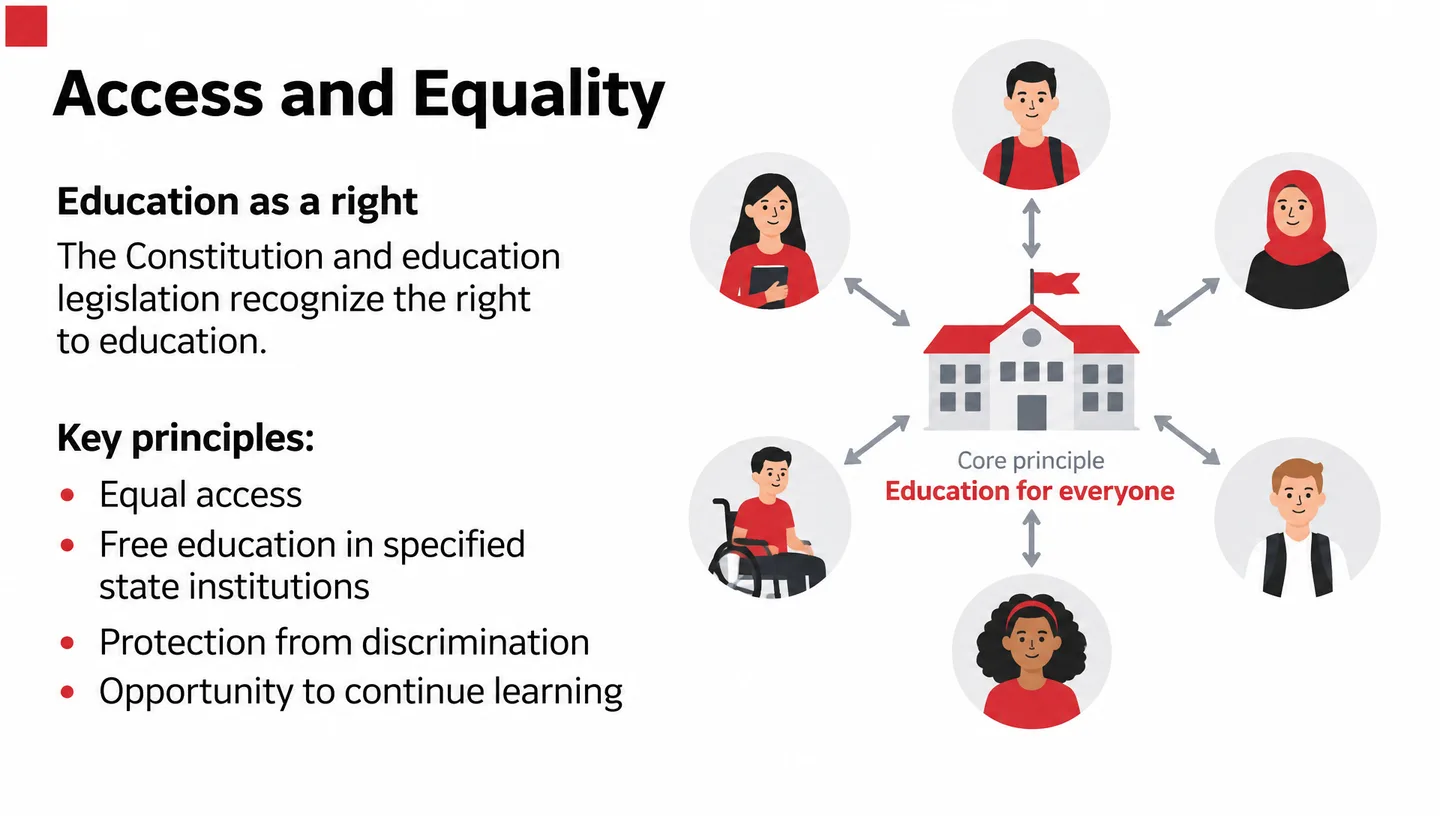
Access and Equality

Education as a right The Constitution and education legislation recognize the right to education. Key principles: • Equal access • Free education in specified state institutions • Protection from discrimination • Opportunity to continue learning Core principle — Education for everyone

Подсказка для выступления

Emphasize that education is presented as a right for everyone. The source lists protection from discrimination based on gender, nationality, language, social or property status, health limitations, religion, residence, and other circumstances.

5. Choosing a Further Path

Choosing a Further Path

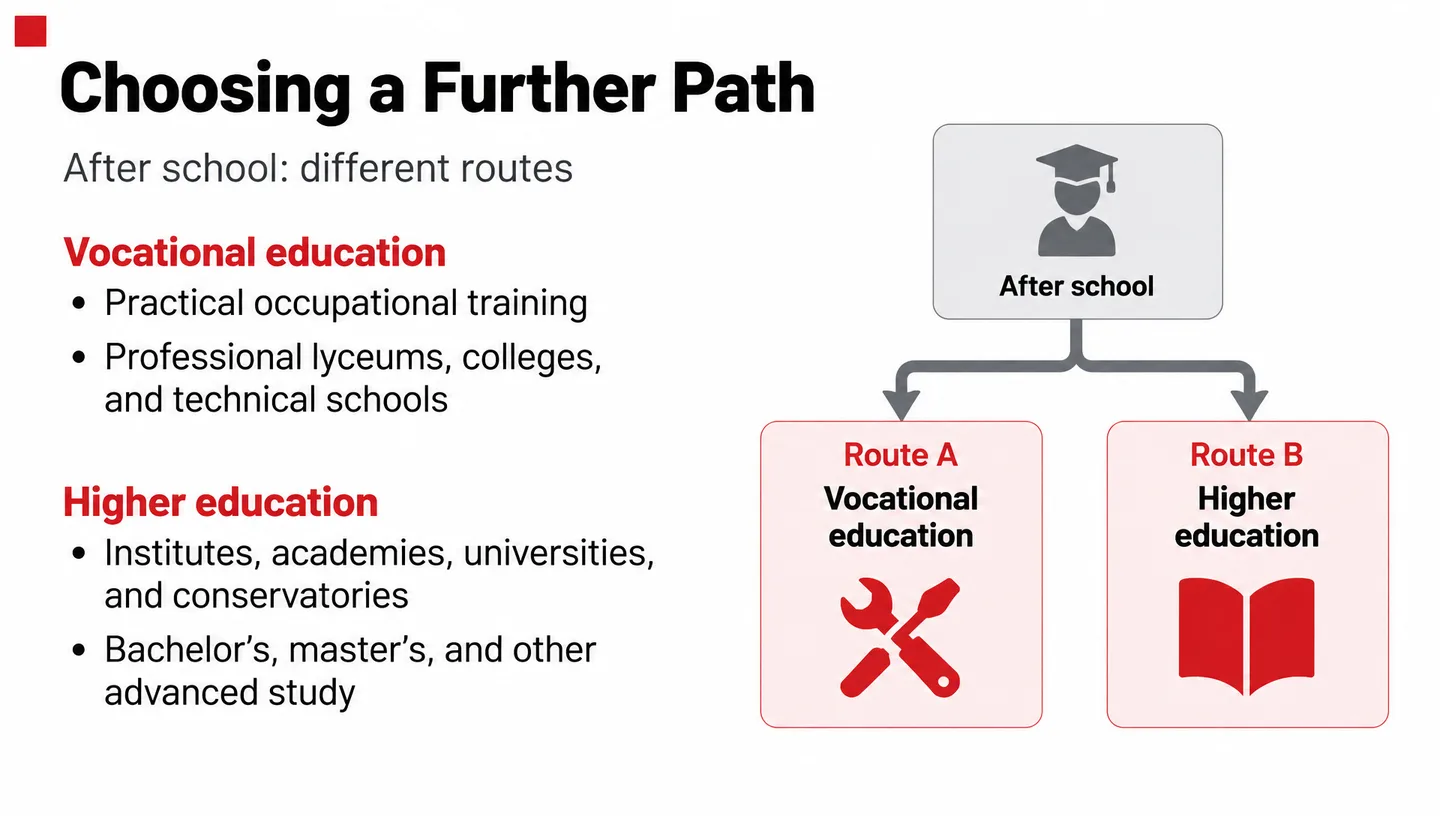
After school: different routes Vocational education • Practical occupational training • Professional lyceums, colleges, and technical schools Higher education • Institutes, academies, universities, and conservatories • Bachelor’s, master’s, and other advanced study Route A — Vocational education Route B — Higher education

Подсказка для выступления

Explain the difference between vocational and higher education. Vocational institutions prepare learners for specific occupations, while universities and other higher institutions provide advanced academic and professional study.

6. Why Quality Matters

Why Quality Matters

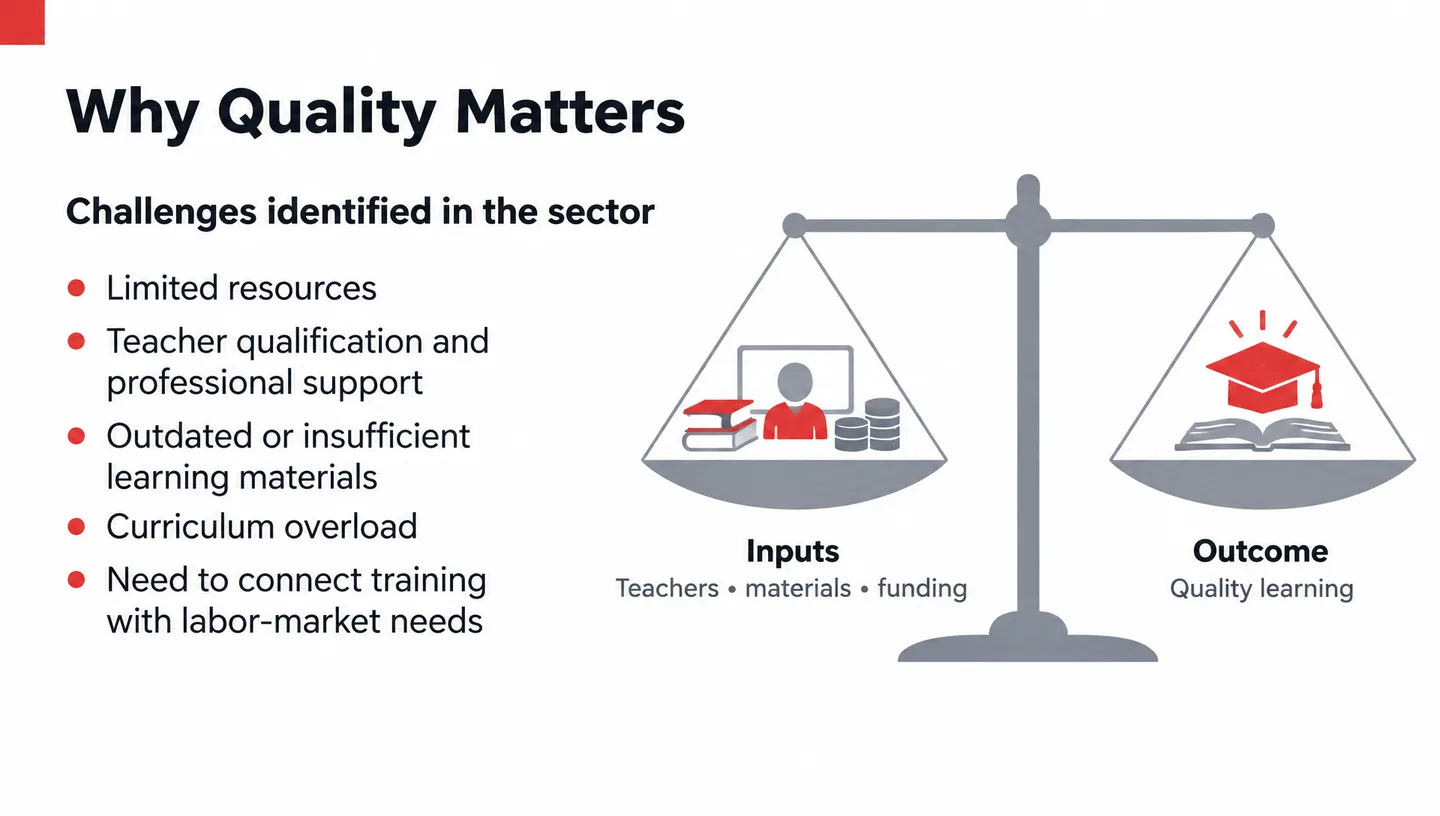
Challenges identified in the sector • Limited resources • Teacher qualification and professional support • Outdated or insufficient learning materials • Curriculum overload • Need to connect training with labor-market needs Inputs — Teachers • materials • funding Outcome — Quality learning

Подсказка для выступления

Present these as challenges documented in the cited sector assessment, not as a complete description of the current situation. Invite students to consider how teacher preparation, learning materials, curriculum design, and funding affect educational quality.