Готовая презентация · 6 слайдов

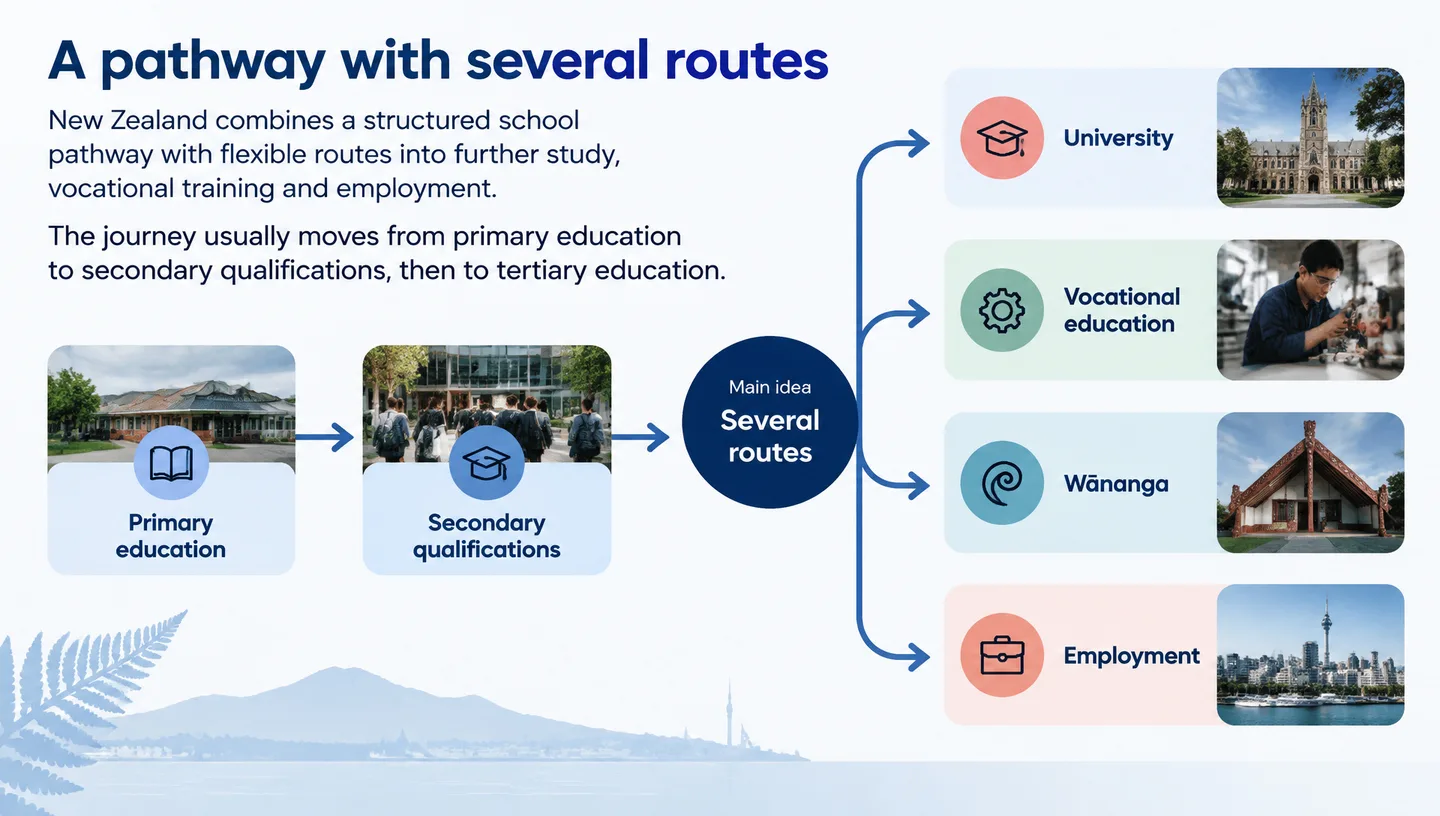
The New Zealand Education System

Education in New Zealand From primary school to higher education School — Primary → Secondary Next step — Tertiary education
Готовая презентация

6 слайдов · PDF и PowerPoint

Бесплатно после входа.

Собрать свою презентацию по этой теме →

В этой презентации

Слайды и пояснения

Показать план

План презентации

  1. The New Zealand Education System
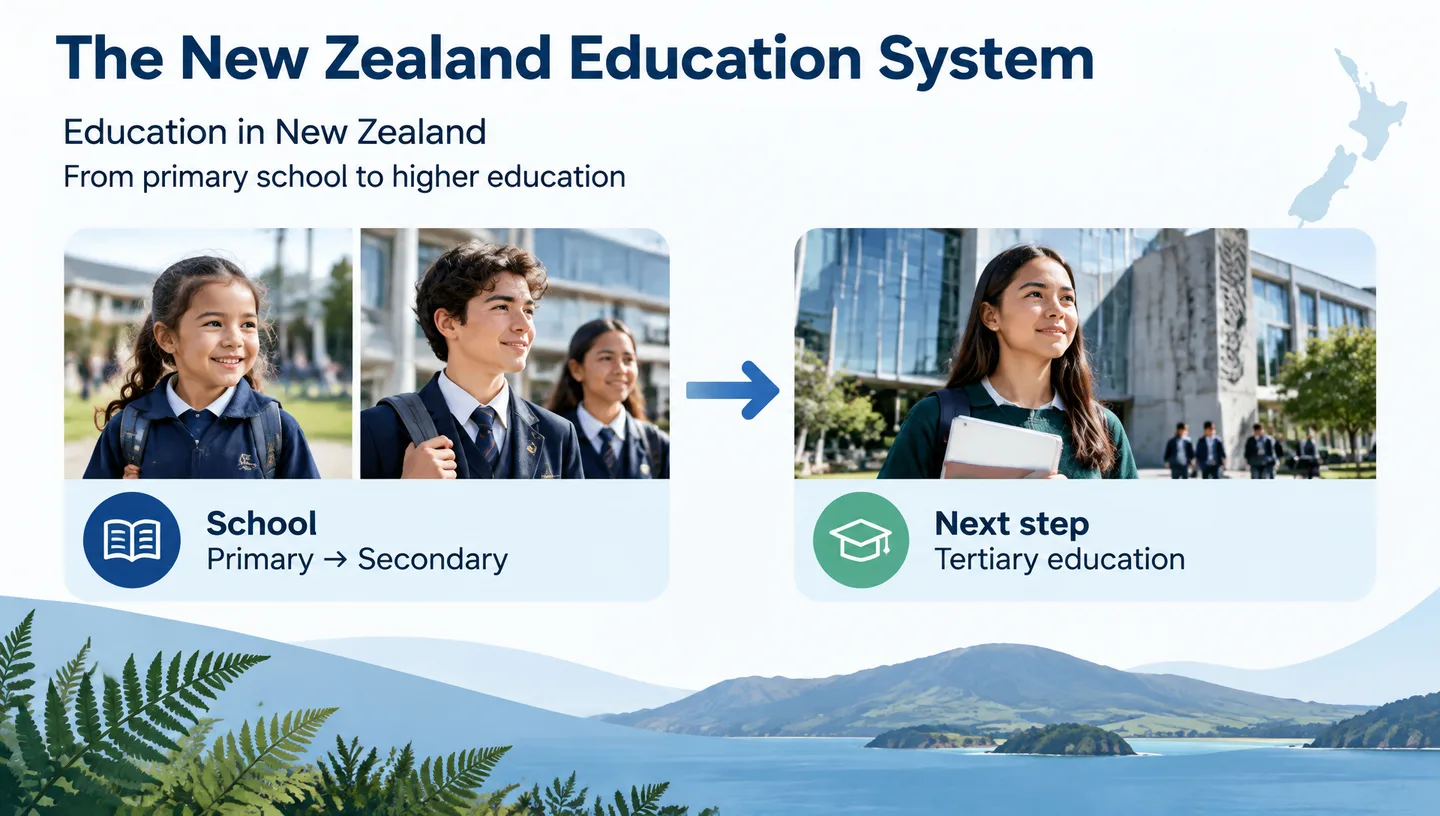
  2. A pathway with several routes
  3. Primary and intermediate education
  4. Secondary school
  5. Different school settings
  6. NCEA: the secondary qualification
1. The New Zealand Education System

Education in New Zealand From primary school to higher education School — Primary → Secondary Next step — Tertiary education

Подсказка для выступления

Open by introducing the topic and the two-part structure of the presentation. Explain that the deck follows a student’s educational journey rather than listing institutions.

2. A pathway with several routes

A pathway with several routes

New Zealand combines a structured school pathway with flexible routes into further study, vocational training and employment. The journey usually moves from primary education to secondary qualifications, then to tertiary education. Main idea — Several routes

Подсказка для выступления

Emphasize that the system has multiple routes after school. This prevents the audience from seeing university as the only successful outcome.

3. Primary and intermediate education

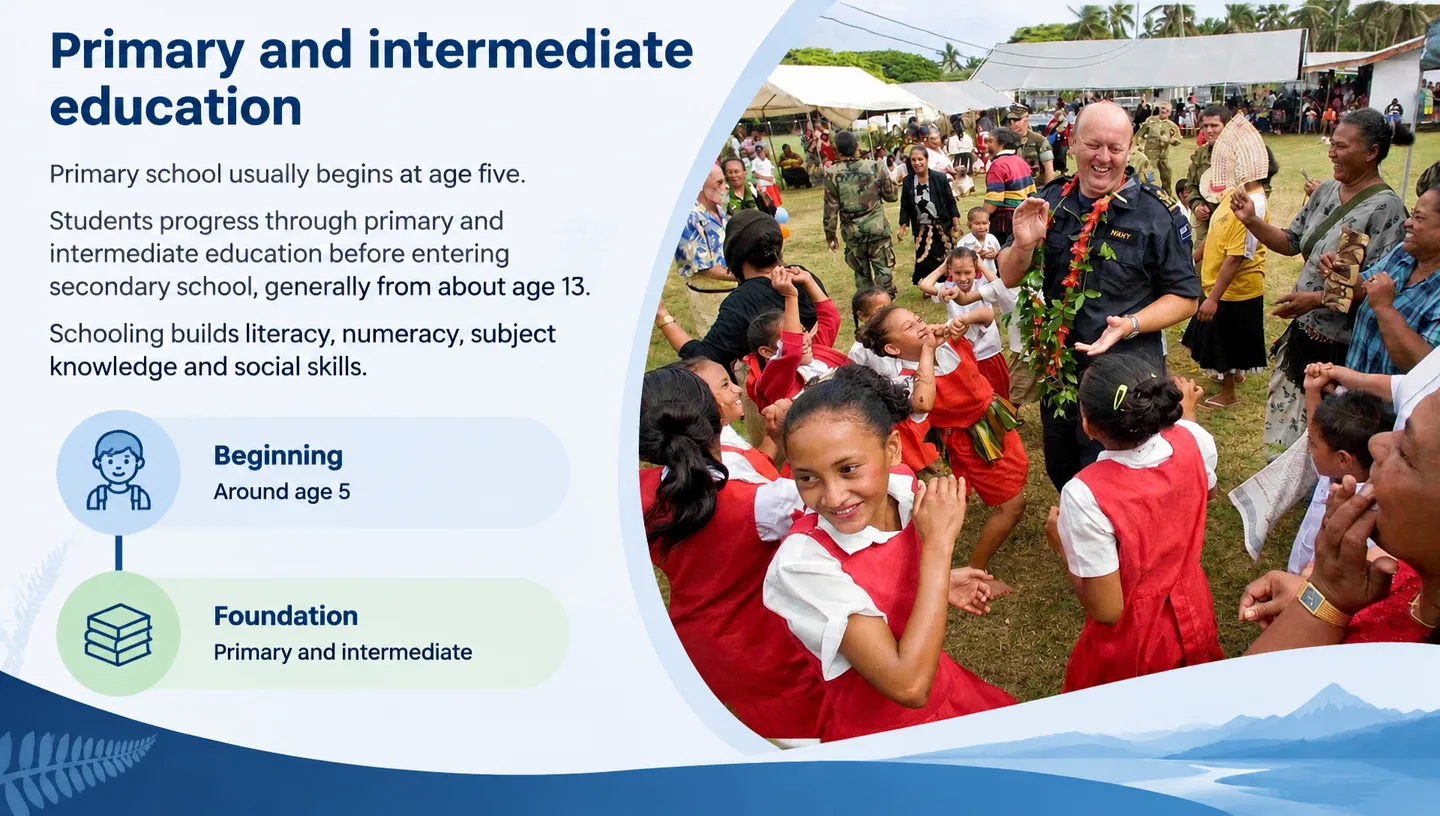
Primary and intermediate education

Primary school usually begins at age five. Students progress through primary and intermediate education before entering secondary school, generally from about age 13. Schooling builds literacy, numeracy, subject knowledge and social skills. Beginning — Around age 5 Foundation — Primary and intermediate

Подсказка для выступления

Explain the sequence from primary to intermediate education. Mention that ages are approximate and that school structures can vary.

4. Secondary school

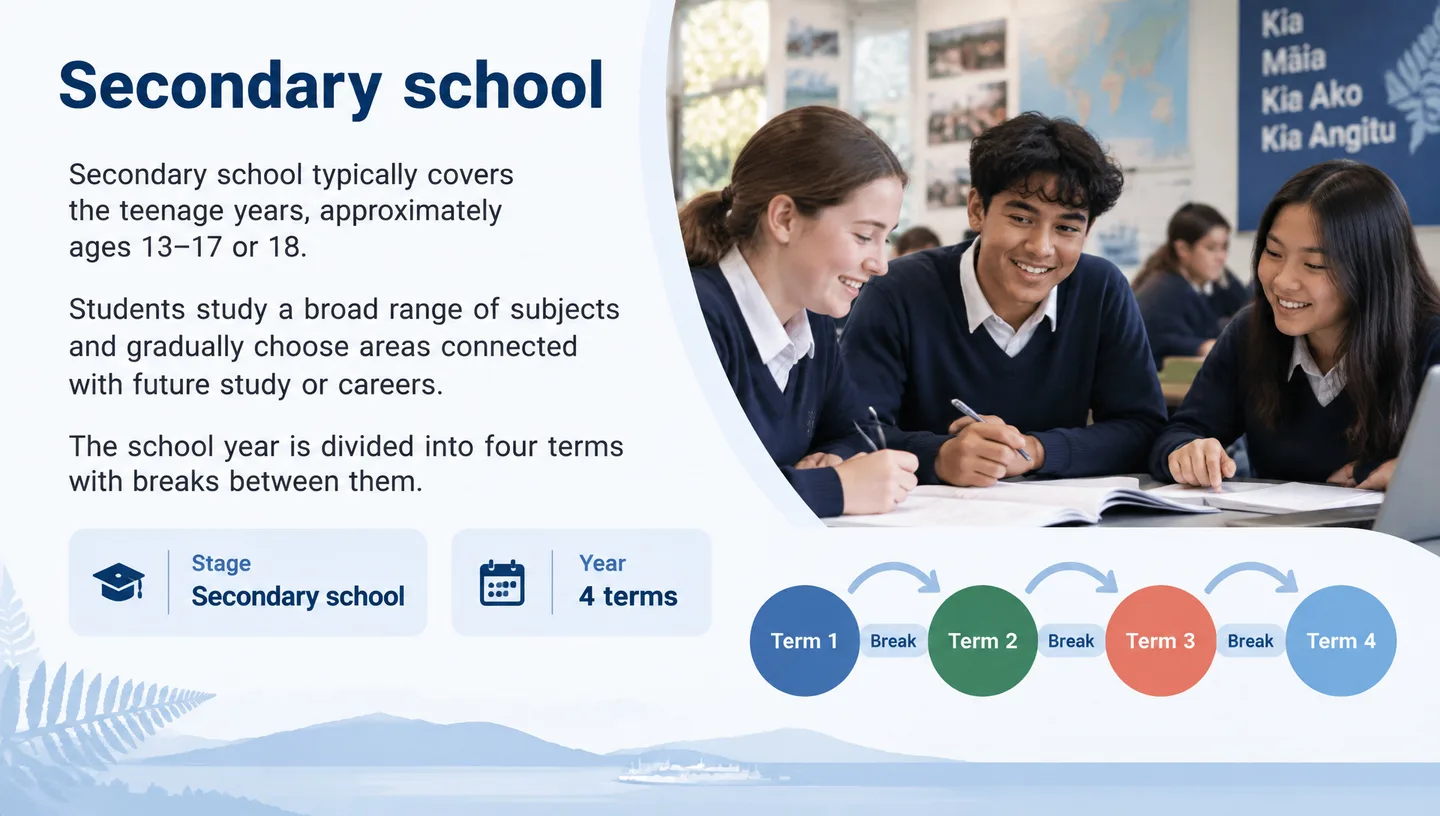
Secondary school

Secondary school typically covers the teenage years, approximately ages 13–17 or 18. Students study a broad range of subjects and gradually choose areas connected with future study or careers. The school year is divided into four terms with breaks between them. Stage — Secondary school Year — 4 terms

Подсказка для выступления

Point out that secondary school is both an academic and developmental stage. The four-term structure helps organize the year, while subject choices begin to connect with future plans.

5. Different school settings

Different school settings

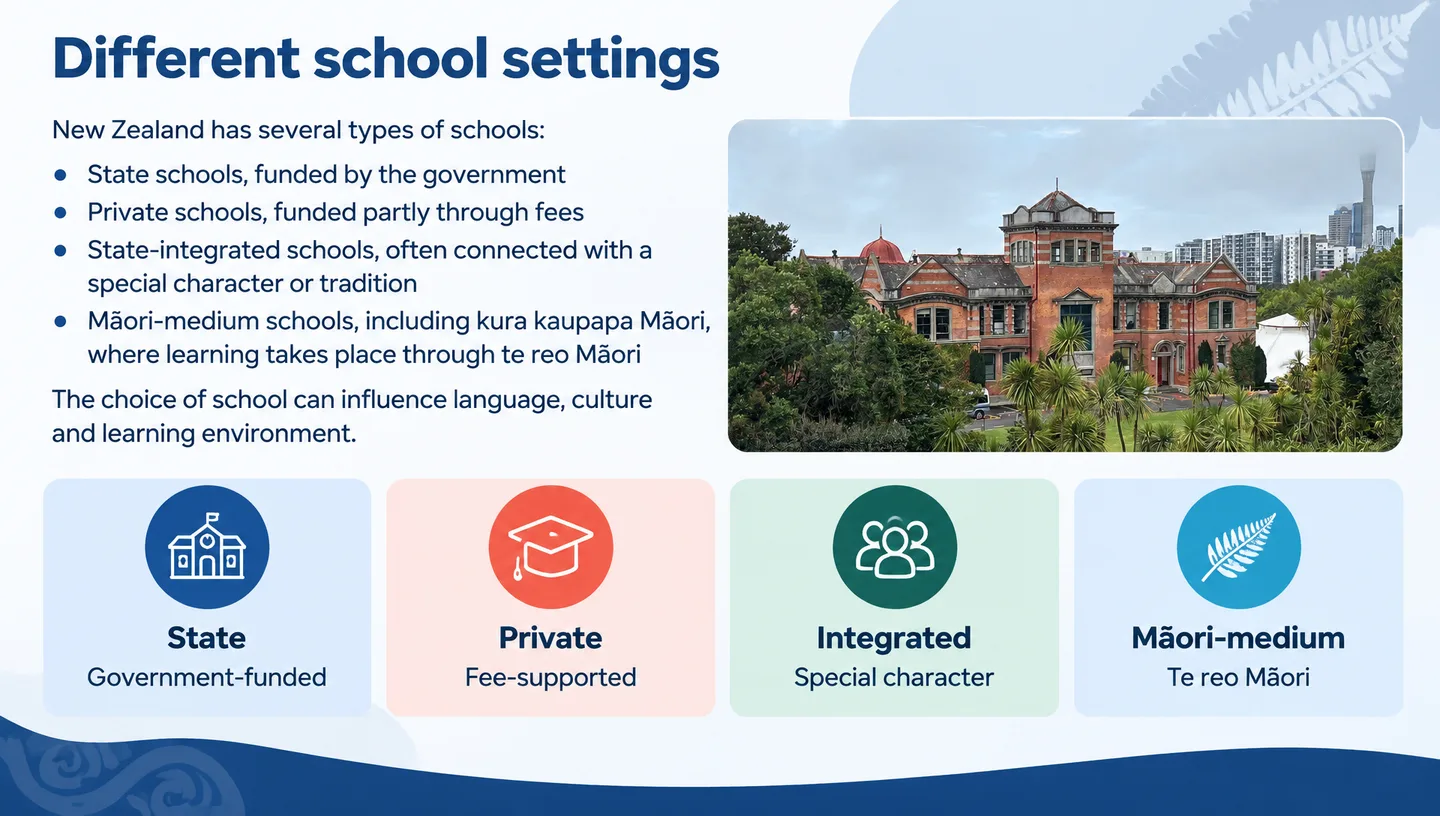
New Zealand has several types of schools: • State schools, funded by the government • Private schools, funded partly through fees • State-integrated schools, often connected with a special character or tradition • Māori-medium schools, including kura kaupapa Māori, where learning takes place through te reo Māori The choice of school can influence language, culture and learning environment. State — Government-funded Private — Fee-supported Integrated — Special character Māori-medium — Te reo Māori

Подсказка для выступления

Clarify that school type is not only a funding question: language, culture and the school’s special character can also matter. Avoid suggesting that one type is universally better.

6. NCEA: the secondary qualification

NCEA: the secondary qualification

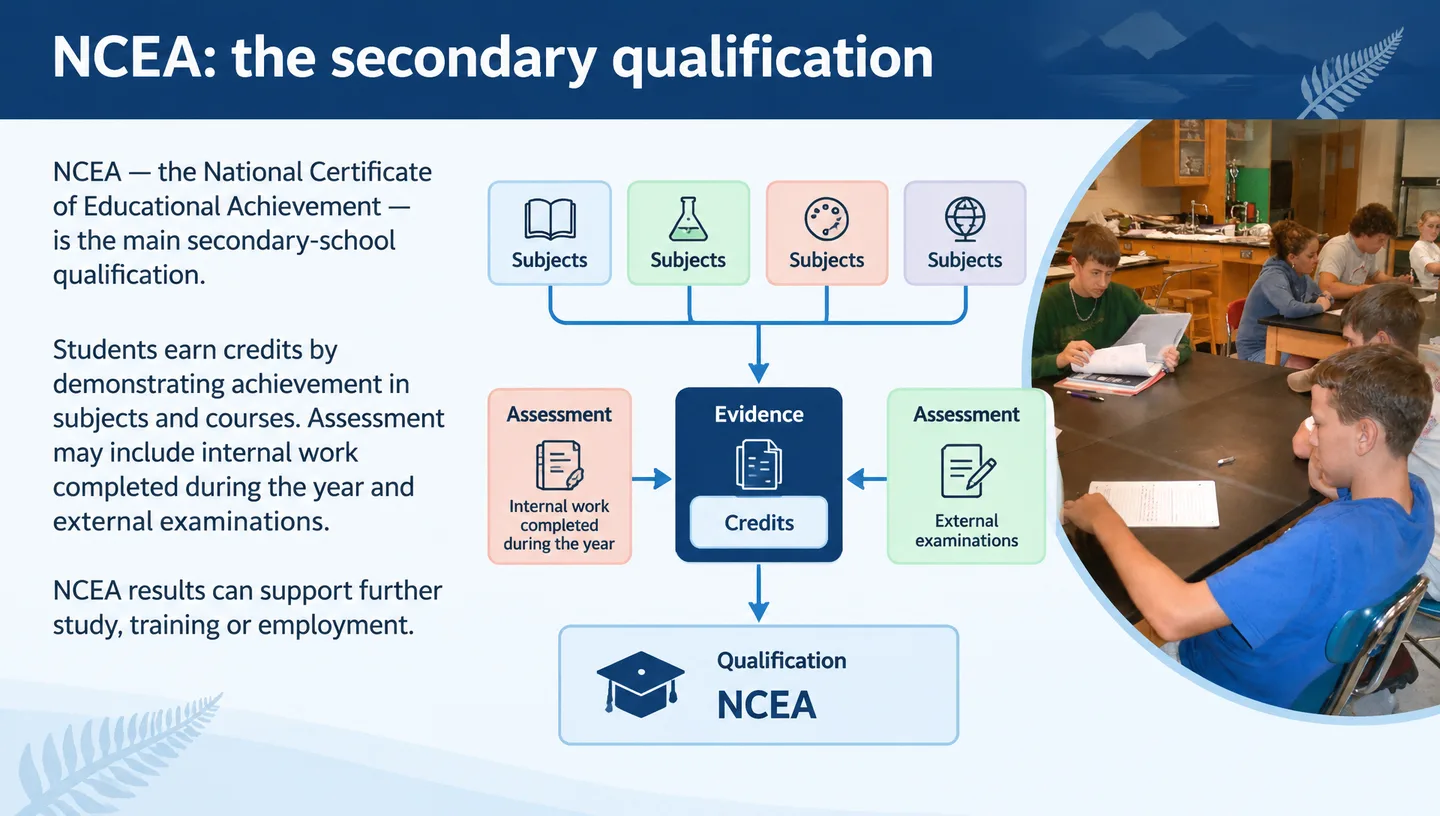
NCEA — the National Certificate of Educational Achievement — is the main secondary-school qualification. Students earn credits by demonstrating achievement in subjects and courses. Assessment may include internal work completed during the year and external examinations. NCEA results can support further study, training or employment. Qualification — NCEA Evidence — Credits Assessment — Internal + external

Подсказка для выступления

Define NCEA in plain language. Explain the difference between credits and assessment methods, and stress that the qualification is built over time rather than decided by one single exam.

Источники